

For many homeowners, finding time to prioritize health and wellness can be challenging. Between work, family commitments, and busy schedules, fitting a trip to the gym into the day isn’t always realistic.
That’s one reason more homeowners are choosing to create dedicated fitness and wellness spaces at home.
But simply adding exercise equipment to an unused room isn’t always enough. The most successful home gyms are intentionally designed around the way you want to move, train, and live. When the environment supports your goals, it’s easier to build routines that stick.
If you’re considering creating a fitness space in your home, here are several factors worth considering before you begin.
Start with Your Goals
Before choosing equipment, finishes, or layouts, it’s important to think about how you plan to use the space.
Do you primarily enjoy strength training? Cardio workouts? Yoga and stretching? Do you want room for recovery and wellness features such as a sauna or cold plunge?
Understanding your goals early in the planning process helps shape everything from room size and flooring selections to lighting, storage, and equipment placement.
A space designed around your actual routine will feel more functional and enjoyable for years to come.
Choose the Right Location
One of the first decisions homeowners face is determining where the fitness space should be located.
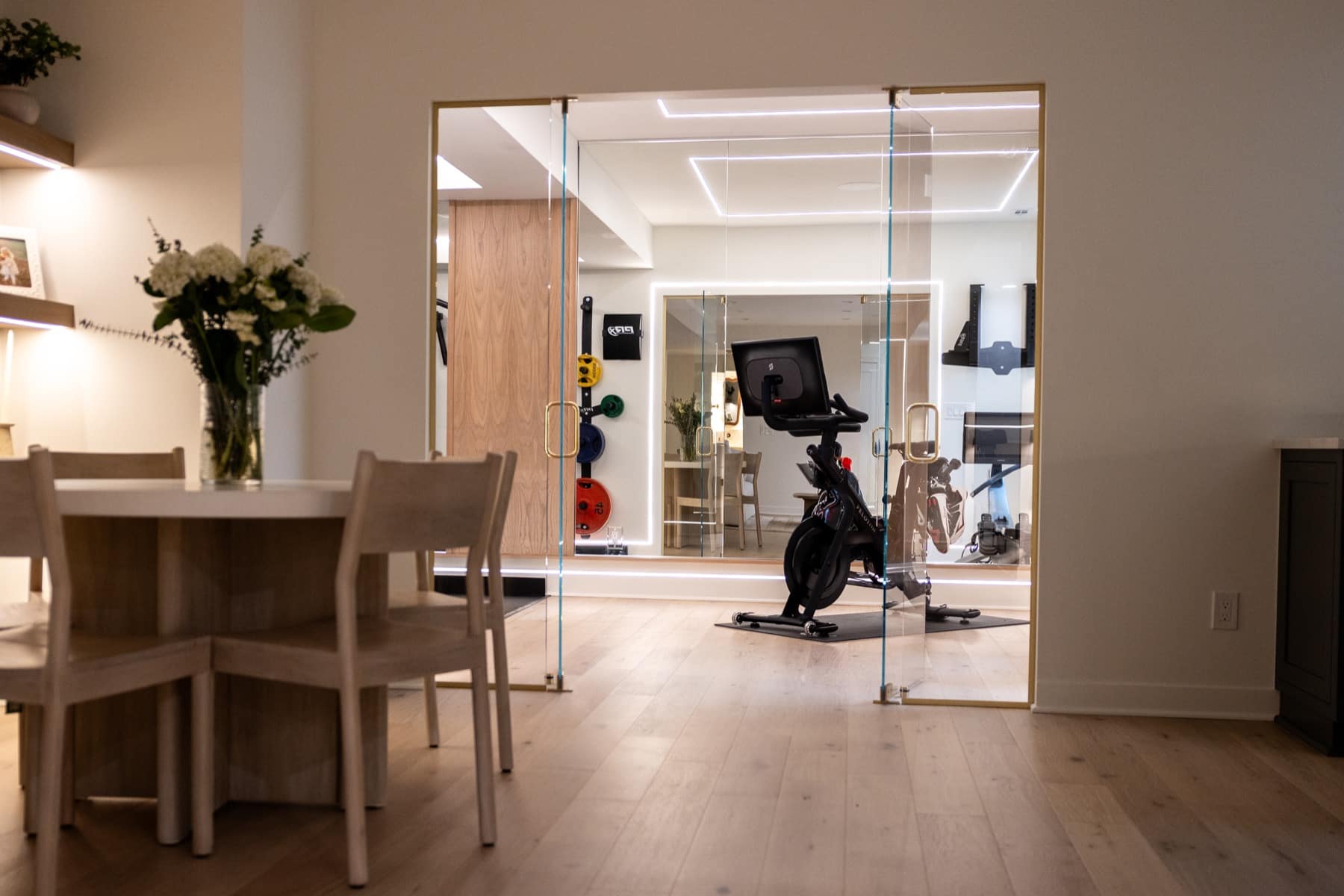
Basements are often a popular choice because they provide flexibility, privacy, and the opportunity to utilize underused square footage. Bonus rooms, spare bedrooms, and additions can also work well depending on the home’s layout and your long-term goals.
The best location is one that feels convenient and naturally fits into your daily routine.
Plan for Equipment and Movement
It’s easy to focus on equipment dimensions while overlooking the space needed around them.
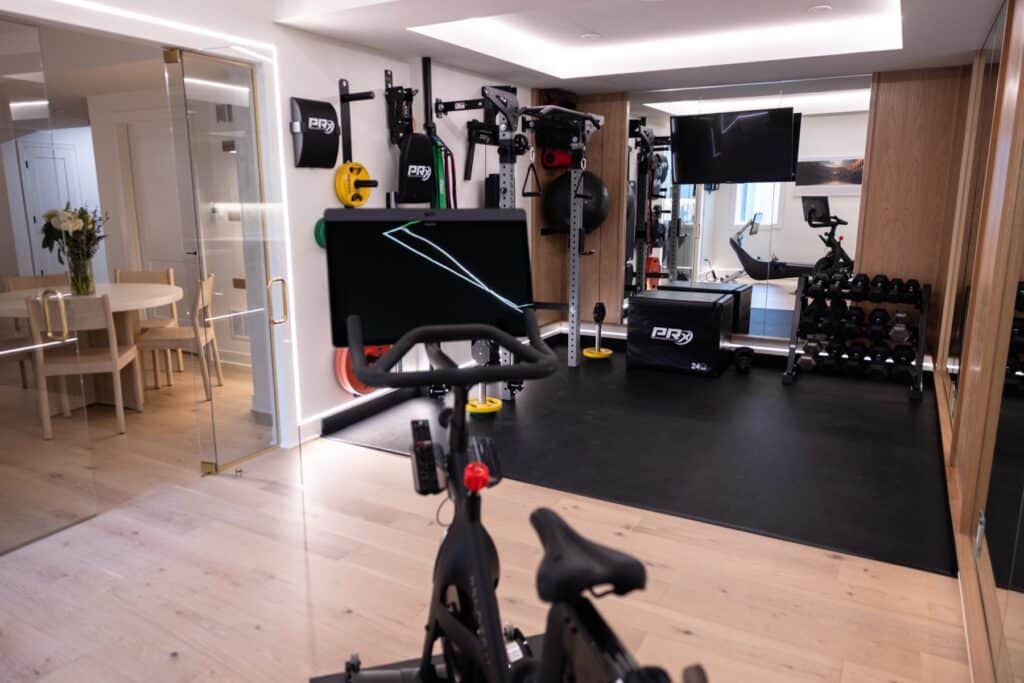
Whether you’re incorporating free weights, cardio machines, resistance equipment, or functional training areas, thoughtful planning ensures there is adequate room to move comfortably and safely.
Consider factors such as:
- Equipment footprint
- Ceiling height requirements
- Clearance around machines
- Open floor space for stretching and mobility work
- Future equipment additions
Designing with flexibility in mind allows the space to evolve as your needs change.
Invest in Flooring That Supports the Way You Train
Flooring plays a significant role in both performance and comfort.
The right flooring can help reduce noise, protect equipment, improve durability, and create a more comfortable workout experience.
Depending on how the space will be used, homeowners may choose from options such as:
- Rubber fitness flooring
- Luxury vinyl plank
- Engineered hardwood
- Carpet tile systems
- Specialty athletic flooring
The best choice depends on your workout style, maintenance preferences, and overall design goals.
Don’t Overlook Lighting and Ventilation
A well-designed environment can make a tremendous difference in how often the space gets used.
Natural light, layered lighting plans, and proper ventilation all contribute to creating a space that feels comfortable and inviting.
Good airflow helps maintain a comfortable temperature during workouts, while thoughtful lighting can create an energizing atmosphere that supports focus and motivation.
These details may seem small, but they often have a significant impact on the overall experience.
Create Storage That Keeps the Space Organized
One of the biggest challenges homeowners face is keeping fitness equipment organized.
Weights, resistance bands, yoga mats, foam rollers, and accessories can quickly create clutter if storage isn’t planned from the beginning.
Built-in cabinetry, shelving, custom storage systems, and designated equipment zones help maintain a clean, organized environment that remains functional and enjoyable to use.
When everything has a place, it’s easier to stay focused on your workout rather than managing clutter.
Consider Wellness Beyond Exercise
Today’s wellness spaces often go beyond traditional workout equipment.
Many homeowners are incorporating features designed to support recovery, relaxation, and overall well-being, including:
- Infrared saunas
- Cold plunge tubs
- Stretching and mobility areas
- Meditation spaces
- Integrated sound systems
- Hydration stations
These additions help transform a simple workout room into a personalized wellness retreat that supports both physical and mental health.
Design a Space You’ll Want to Use
At the end of the day, the most successful fitness spaces aren’t necessarily the largest or most expensive. They’re the ones that fit naturally into everyday life.
A thoughtfully designed environment can help remove barriers, support healthy habits, and make wellness more accessible from the comfort of home.
Whether you’re converting an unfinished basement, repurposing an existing room, or planning a larger renovation, investing in a space tailored to your goals can create lasting value for both your home and your lifestyle.
Ready to Explore What’s Possible?
At KCBR Design | Remodel, we help homeowners create personalized spaces that support the way they live. From dedicated workout rooms and basement fitness centers to complete wellness retreats, our design-build team works closely with clients to create spaces that are both functional and inspiring.
If you’re considering a fitness or wellness space in your home, we’d love to help you explore the possibilities.